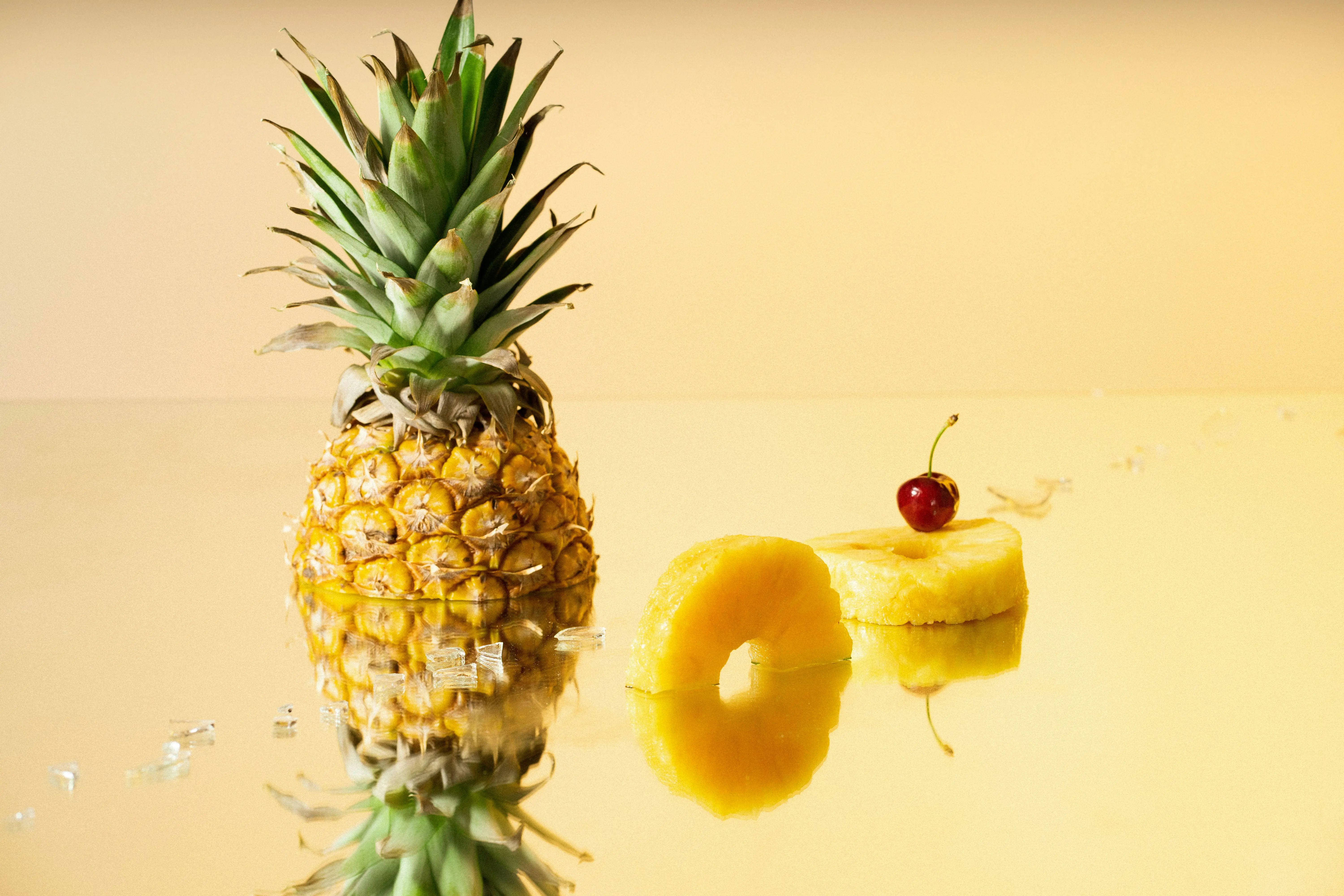
Yes, diabetics can eat pineapple, but it deserves more portion awareness than lower-sugar fruits like berries or grapes. Pineapple sits in the medium-to-high range for both glycemic index and natural sugar content, so how much you eat matters more here than it does with many other fruits.
How Much Does Pineapple Raise Blood Sugar?
Pineapple has a glycemic index around 59 to 66, placing it in the medium range, higher than grapes or apples, but not as extreme as watermelon on that scale alone. Where pineapple differs from watermelon is glycemic load: pineapple has more total carbohydrate per serving, since it isn't nearly as water-diluted.
A typical 1-cup serving of fresh pineapple chunks contains about 22 grams of carbohydrate, roughly double what a cup of watermelon or berries contains. That combination of a moderate-to-high GI and a meaningful carbohydrate count per serving is why pineapple calls for more careful portioning than many other fruits.
What's a Reasonable Portion?
A smaller serving, around half to three-quarters of a cup, is a more diabetes-friendly starting point than a full cup, bringing the carbohydrate count closer to 11 to 16 grams, in line with lower-sugar fruit servings. This isn't a hard rule, but a practical way to enjoy pineapple without a large single dose of fast-absorbing sugar.
Fresh pineapple is also meaningfully different from canned pineapple packed in syrup, which adds substantial additional sugar on top of the fruit's natural content. Canned pineapple packed in its own juice is a better choice than syrup-packed, and fresh is better still.
Pineapple contains bromelain, an enzyme with some anti-inflammatory properties, along with vitamin C and manganese. None of these make pineapple a nutritional cure-all for diabetes, but they're a reasonable trade-off for a fruit that requires more portion discipline than others.
The fiber in fresh pineapple also helps moderate its own absorption somewhat, which is part of why whole fresh pineapple behaves differently in the body than pineapple juice, which contains essentially none of that fiber and delivers concentrated sugar much faster.
Pineapple Juice Is a Different Conversation
Removing the fiber and concentrating the juice from multiple pineapples into a single glass changes the math considerably. A cup of pineapple juice delivers a fast, concentrated dose of sugar without the fiber that would normally slow its absorption. Whole fruit is consistently the better choice over juice for anyone managing blood sugar.
The Bottom Line
Pineapple can fit into a diabetes-friendly diet, but it rewards a smaller, more deliberate portion than many other fruits, along with a preference for fresh over canned-in-syrup or juiced versions. Pairing it with protein or fat, and keeping servings to around half to three-quarters of a cup, keeps the blood sugar response manageable.
Questions about how specific foods fit into your own diabetes management plan? CareArc's primary care team can help build guidance around your actual numbers. Request an appointment to get started.